
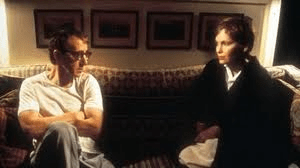
What is a “personal film”? Is it simply a question of autobiography, a branch of life writing? Or do these so-called personal works transcend autobiography by using the tricks of fiction as a way to obscure—or enhance—the personal nature of the work? And in the end, does it matter? All artists draw from their lives, searching for ways to make sense of their experience: life becomes redeemed—and transformed—by art. For certain types of artist—the confessional poet and the personal essayist, say—the task is unambiguous, though not without ambivalence: the poet and the essayist are at the centre of their work. They know it, and so does the reader, even though the poet and the essayist might employ sleight of hand as much as any creator of fiction. But what about the “personal filmmaker”, who at the outset almost has to claim her vision as “personal”, as if this declaration in itself was a way of vouching for the legitimacy of their work: it’s personal, therefore it must be true. While those filmmakers that do not announce the personal nature of their films—Stanley Kubrick’s Eyes Wide Shut, Terrence Malick’s The Tree of Life—are subjected to intense speculation anyway, because of their reticence: what are they hiding?
Unlike the poet and the essayist the personal filmmaker rarely works alone. Financial and technical concerns affect aesthetics. Casting choices simultaneously enhance and obscure first-person strategies. So how does the work remain “personal” when so many people, and so many factors, are involved? And how does a critic write about “personal films” knowing that a moment they single out might be “the flash-bomb vitality that one scene, actor, or technician injects across the grain of film” (Manny Farber)?
Getting Personal, a virtual season, sets out to cover the terrain of the “personal film” as practiced by a new generation of filmmakers—Noah Baumbach (The Squid and the Whale), Lena Dunham (Creative Non-fiction, Tiny Furniture, Girls); Mia Hansen-Love (Goodbye, First Love) and Joanna Hogg (Unrelated, Archipelago)—while drawing on the work of the “personal film’s” progenitors: Woody Allen’s “novels on film”, John Cassavetes’ psychodramas, and the essay-films of Chris Petit and Agnes Varda. It examines the way literature—particularly the essay—continues to influence movies, though not necessarily because of screen adaptations of books. It asks the questions: why are these filmmakers flourishing now? And what does our appetite for—and response to—works of a personal nature say about us?
—MM
Archipelago
Before I Forget
Content
Goodbye First Love
Husbands and Wives
Keep the Lights On
My Winnipeg
Something in the Air
The Squid and the Whale
Tiny Furniture
The Tree of Life
Unrelated
Weekend
 Running From The Reels