
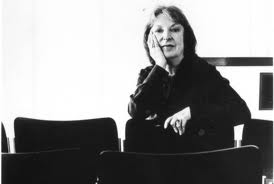
The Library of America is finally bringing out a collection of Pauline Kael’s selected writings, The Age of Movies. It will be interesting to see how Sanford Schwartz’s selection compares with For Keeps, the anthology that Kael published not long after her retirement in 1991. Kael’s personal selection was organized chronologically except for the book’s first piece — Hud: Deep in the Divided Heart of Hollywood. This is one of my favourite Kael essays, though not necessarily for what she has to say about Hud. I think it says a lot about the way in which Kael appeals to readers, while simultaneously infuriating film-makers and her detractors. The latter would no doubt say that such a piece is all about Kael. But she was actually quite sparing with her autobiographical reminiscences, which consequently made me want more.
“The summer nights are long on a western ranch. As a child, I could stretch out on a hammock on the porch and read an Oz book from cover to cover while my grandparents and uncles and aunts and parents didn’t stir from their card game. The young men get tired of playing cards. They either think about sex or try to do something about it. There isn’t much else to do—the life doesn’t exactly stimulate the senses…
My father who was adulterous, and a Republican who, like Hud, was opposed to any government interference, was in no sense and in no one’s eyes a social predator. He was generous and kind, and democratic in the western way that Easterners still don’t understand: it was not out of guilt or condescension that mealtimes were communal affairs with the Mexican and Indian ranch-hands joining the family, it was the way Westerners lived.”
Notice how Kael’s voice pulls you in? It reads like fiction — the beginning of a short story, perhaps. It would not be out of place in Joan Didion’s Where I Was From, which is ironic given Kael’s put-down of Didion’s style in her review of the film adaptation of Play It As it Lays. I also think it’s a lovely example of what David Shields, in his book Reality Hunger, refers to as “critical intelligence in the imaginative position”.
—MM
 Running From The Reels