35 SUNDAYS: THE LONG GOODBYE
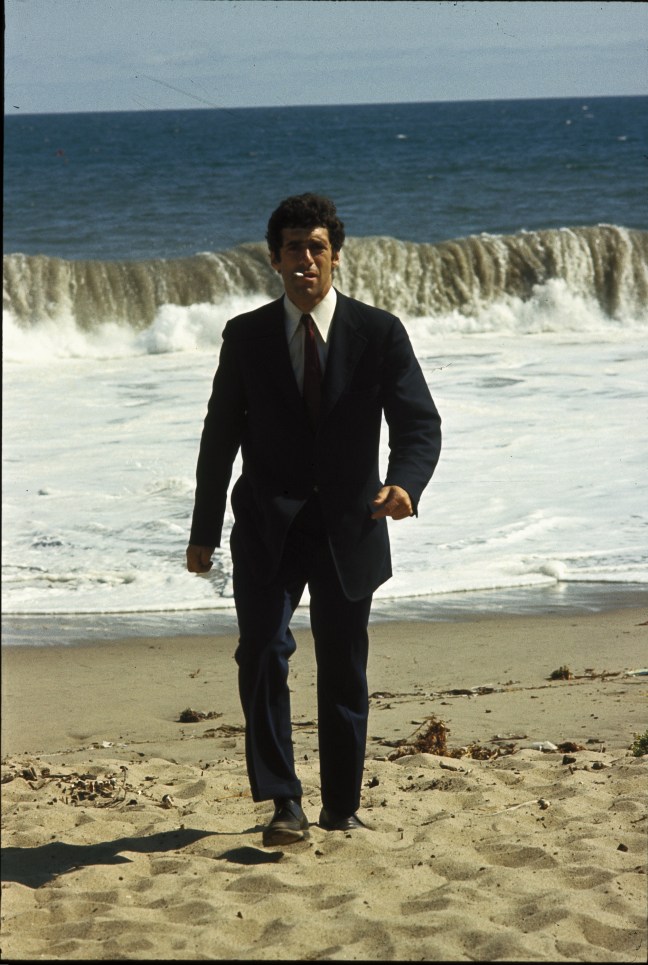


We didn’t get a chance to talk about Inherent Vice. How could we at ten-to one in the morning, as we stumbled out of the Prince Charles Cinema, at the back of Leicester Square, and made our way, appropriately as it turns out, through Chinatown? I don’t know if I was any clearer the next day. Even my morning swim couldn’t integrate the night’s images. The movie was all jumbled up — in my head, I mean — and still is to some extent. That’s surely by design. Paul Thomas Anderson has cited The Big Sleep as an influence on how he approached Thomas Pynchon’s novel and the vagaries of its plot. In other words, confusion reigns. Trailing a decade’s worth of morning-afters in its wake, we might need at least another decade before we can get a clear perspective on it. Either that or repeated viewings. One thing is clear: Inherent Vice is already assured of cult status, it is its own all-nighter, destined for late shows and flea pits the world over — if either of the latter still exists. Anderson’s film suggests they do, or makes it imperative that they are brought back. For he treats the medium of film — celluloid, be it 35mm or 70mm — as though it were a missing person: what happened to it? What happens if we follow the money? What would it take to revive it, to turn a tantalising flicker into a flame? And what are we supposed to do with all this longing? All of which is a good place to start if we want to get a handle on Inherent Vice.
—Mick McAloon

In Richard Linklater’s 1995 film Before Sunrise, Jesse, an idealist young American travelling through Europe, tries to persuade Celine, a French woman he has just met, to spend the day with him in Vienna. Crucial to his line of reasoning is the idea of regret: what if they let this moment go and spend the rest of their lives wondering “what if?” So Jesse asks Celine to imagine a point in the future, ten or twenty years down the line, when life is no longer filled with the promise of youth: “Think of this as time travel”, he tells her, “from then till now.” What might this potentially life-changing encounter, this interruption of the quotidian, mean to them as they approached middle age? It’s a good question, and one that Linklater and his actors, Julie Delpy and Ethan Hawke, have attempted to answer on two further occasions: Before Sunset picked up Celine and Jesse’s story nine years later, while the third film in the series, Before Midnight, is scheduled for release in June of this year. Jesse’s remark—“Think of this as time travel”— now takes on an even deeper resonance—and not only for the film’s protagonists.
Not that we could have known—my wife and I—that a film we watched on a Saturday night, in April, 1995, would end up serving as a marker in our own lives. How could we? Back then, we were still ten years off being married. Not only that, but I doubt the filmmakers themselves had at that point conceived of returning to their fictional creations. Besides, Before Sunrise was not the kind of film that spawned sequels, and certainly not in the mid- 1990s: studio-backed but “personal” and “independent”; episodic rather than plot-driven; and with long, languorous takes—it lived out of a backpack, as it were. But from the start it had the one special effect intrinsic to cinema itself: the concept of time. Which makes it make it sound “heavy” for a Saturday night at the movies, though it was anything but.
In those (pre-congestion zone) days, we thought nothing of driving into the West End to see a movie. And on the following Monday morning, when I returned to my job as a video buyer for HMV…Well, there you go: perhaps you can see what I’m getting at: video, HMV—how much has already gone to the wall. Or as Celine tells Jesse (in Before Sunset): “It’s about that moment in time that’s forever gone.”
Of course, it was only with the arrival of the second film that Linklater revealed the hand that had been there all along. It took Before Sunset for me to see it. The actors had noticeably aged, especially Hawke, who looked as though the interim years had not been kind: the boyishness was gone, and when Jesse spoke of a marriage failing one felt that Hawke was speaking from experience. (Hawke is a co-writer on the film, along with Delpy and Linklater.) The euphoria and sense of possibility that the first film engendered had been replaced by a feeling of disappointment that is positively Chekhovian in its lament for lost time and unrealized dreams.
By the time Before Sunset came out (2004), I was working in cinema exhibition—cinema management, film programming and projection—and on at least three occasions screened the films in a double-bill. So I could see how each film deepened and enriched the other. But even to write these words is to realize how much has changed in such a short span of time. The idea of a double-bill is almost a thing of the past. Since the release of Before Sunset, the cinema I manage has undergone both a name-change and, like many cinemas, its own technological revolution: films nowadays are rarely screened on 35mm prints. When Before Midnight is finally released in June, it will almost certainly be digitally projected, with reels replaced by a DCP (digital content package). And where is the romance—the loveliness—in that? But that is where we are: things change, losses accrue. We go on.
In 2005 my wife moved to New York (for work), while I remained in London, which seemed—on the surface, anyway—a Jesse and Celine type predicament. In reality, it meant I made numerous trips to New York, eventually moving there in the summer of 2007. When I wasn’t applying for jobs I spent a year walking the streets, exploring the canyon avenues. I went to the movies, subscribed to American magazines, looked after our old cat, and enjoyed a different kind of existence. A friend asked if I was “re-inventing myself”. I told him no, but I knew what he meant: I was exploring the “what if” of my own life.
And then in May 2008, as my year in New York was coming to its visa-imposed end, I stepped out of a bookshop in Chelsea and recognised a man in his late thirties, walking up 10th Avenue, his son beside him. It was Ethan Hawke, or Jesse if you are given to speculating about fictional characters. He looked well, which made me think that Celine was back in his life. At that point, I had no idea if another film was in the works; there were only rumours of a reunion. But here we are in 2013 and I’m not sure what to expect.
—MM


 Running From The Reels