DAVID MAMET’S HONEST HYPOCRITES

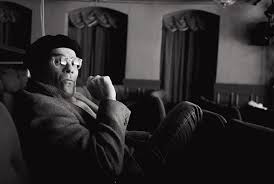
Whenever I watch David Mamet’s films, I am reminded of William Hazlitt’s brilliant essay on actors.  Actors, wrote Hazlitt, “are the only honest hypocrites.”  To which we might tentatively add those honorary members of the acting profession—the con man and the politician.  From House of Games to Wag the Dog, Mamet has presided over films that are like elaborate tricks, in which con-artists act out roles in exquisitely designed scams.  Whichever way you look at it, somebody is always being duped—and that includes us.

In Redbelt, Mamet’s ninth film as a writer-director, it’s Mike Terry (Chiwetel Ejifor), a jiu-jitsu instructor, who gets seduced by Hollywood-types and scammed by fight promoters, all in the name of entertainment.  Money’s involved, as it usually is in Mamet, and pride and honor is thrown into the mix.     Mike is ex-army, though what he did “out there”—presumably Iraq —is only briefly alluded to. (Mamet has always resisted back-story.) Mike runs a jiu-jitsu academy in L.A., training, among others, cops and doormen in the art of self-defense.  Two incidents early on trigger the plot. In the first, a woman (Emily Mortimer) enters the academy and (inadvertently) shoots out a window, narrowly missing one of Mike’s cop-students.  In the second, Mike comes to a movie star’s rescue in a nightclub brawl.  Both scenes establish Mike’s character—honorable and tough.  And both leave him vulnerable to outside forces.  The film charts Mike’s journey from idealist to practical idealist.

Mike’s idealism is taken for weakness, though his wife would probably call him naïve, or at the very least mock his purity.  Mike is a fighter who refuses to fight—“competition weakens the fighter”, he tells her.  His wife sees this adherence to a code as a refusal to participate in the messy business of life.  She would seem to be the practical one.  Where Mike talks in such abstract terms of not wanting to bring shame or dishonor upon the Academy, she just wants to keep the damn thing open, trading for business.  Money’s tight, a problem which becomes further exacerbated after Mortimer’s explosive entrance. When we first see Mortimer, she’s driving through LA in search of a prescription: cascading rain, agitated wipers, and deserted streets. Things are that bad you half expect her to run into Julianne Moore and Magnolia’s biblical downpour. Mamet has always loved noir’s theatrical landscape, a place where he can house his games.  Redbelt, then, has one foot in noir and the fight picture, while simultaneously reaching for the nobility of the Samurai film.  Certainly, Ejifor’s performance, and the role as written, is more in keeping with the latter. It’s a lovely performance—calm, centered, physically contained, and not unlike Val Kilmer’s Special Forces operative in Spartan, though Kilmer had his own cool, quizzical thing going on.

Although Mamet works predominantly within established genres, there is always something fresh about his approach.  He moves into genre as one might move into a listed building: he respects the architecture, the building’s history, but makes it feel like home—Mamet world—filling it with the people and the things he likes. His films constitute a democracy ruled by a tyrant: actors and non-actors happily co-exist; the movie star and the repertory player are equally at home; and there is always room for family and friends (Rebecca Pidgeon, William H. Macy, Joe Mantegna, and Ricky Jay).  But all toe the Mamet line (or lines). His famously profane speech is as distinctive and as metronomically precise as a Philip Glass score: tick-motherf***ing-tock. At its best (American Buffalo, Glengarry Glen Ross,) Mamet’s dialogue gives the impression of being ragged and wild, though it is anything but; at its most jarring, the actors speak as though listening to a click-track.  Control is Mamet’s thing, and he rarely loses it.   (Or as Mike puts it, “take the fight out of your face.”)

This extends to his mise-en-scene, which, understandably, is often overlooked because of the dialogue.  Like Robert Bresson, another advocate of non-actors, Mamet constructs sequences from uninflected shots and uninflected performances—Mamet’s dialogue is inflected enough.  But as Phillip Lopate suggested, as early as Homicide (1991), Mamet has been “evolving a personal cinema which may yet stand comparison with that of anyone of his generation.”  I agree.  Think of those modern juggernaughts of genre, the Oceans and Bourne trilogies, fast and slick, franchise-ubiquitous, whose roll-out and distribution patterns enact a kind of zoning—the Starbucks of the multiplexes. Then think of Mamet’s versions (Heist, Spartan), which are bespoke by comparison, European in sensibility, despite the Americanness of the dialogue and the roll-call of Great American Actors who have lined up to shoot his intoxicating breeze—Newman, Pacino, DeNiro, Hackman. For over two decades, Mamet, no less than John Cassavetes or even Larry David for that matter, has been making a form of home movie but without venturing into the deeply autobiographical or personal nature of his plays (The Cryptogram, The Old Neighborhood).  (Although I’ve long thought that the wonderful scenes between Philip Seymour Hoffman and Rebecca Pidgeon in State & Main were a tribute to his wife.)  And then there are Mamet’s views on acting, best exemplified by William H. Macy.  You only have to see Macy in films that aren’t by Mamet (Fargo, Magnolia, The Cooler) to see the influence Mamet exerts on American film. And where would HBO (Entourage) and Showtime (Mad Men) be without  Mamet’s Men (Piven, Slattery)?

In the same way that Virginia Woolf’s unsigned essays for the TLS were manifestos for the novel, as Woolf saw it, Mamet’s essays and books espouse a theory—his theory—of filmmaking and acting, which the films admirably demonstrate.    Mamet is the practical idealist.  The book he wrote for actors, True or False: Heresy and Common Sense for the Actor, is full of plain speaking advice: “…my views have been informed by and directed toward performance on the stage in front of a paying audience.  That is what acting is. Doing a play for the audience.  The rest is just practice.  And I see the life of the academy, the graduate school, the studio, while charming and comfortable, are as removed from the life (and the job) of the actor as aerobics are from boxing.” 

You could see this as further evidence of Mamet’s control extending beyond the confines of his film set or the rehearsal studio.  Or perhaps it’s simply Mamet’s way of keeping his own actors—his hypocrites—honest.

—Mick McAloon

NOAH BAUMBACH—Deja Vu

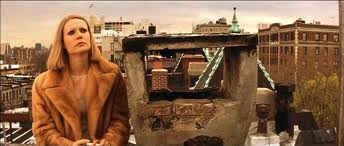
From its Eric Rohmer-inspired title, to its poster’s mid to late 70s art-directed aesthetic—with Nicole Kidman in profile, and that bright floppy hat a further giveaway—you could be forgiven for thinking you’d already seen Margot at the Wedding.  I know that’s how I felt prior to seeing the film at the NYFF in 2007.  I fully expected that there was going to be bookish talk by bookish people, and that the camera was going to be as skittish as Margot and her dysfunctional family.  Up on the screen it was going to look like life, while never letting you forget that you were watching a movie, with its abrupt and startling cuts which spoke of a filmmaker very much attuned to the romance of making a certain kind of film.  All at once it was going to look natural and airy, yet also muted, as though all of the colours had been drained in advance so that Noah Baumbach would never have to worry about his film becoming dated.  (It’s like longing to make a dirty-sounding record in an era of clean technology.)  In other words, Baumbach (along with Harris Savides) dated the movie himself. He did something similar with Greenberg.  The mores and manners belong to contemporary times, but the atmosphere evoked is of an earlier period of American film-making.

—MM

WES ANDERSON’S NEW YORKER FICTION—10 Years Later

It could be something out of a Preston Sturgess movie.  A bookish, young American is travelling alone from London to New York.  His preferred means of travel: an ocean liner, the QE2 no less.  That there are people waiting for him in London — anxious business associates, attuned to modern ways — doesn’t worry him; he is impervious to such distractions.  His name is Wes Anderson, and judging by his movies, as well as the cover of a recent Film Comment, he’s in a world of his own.

There was no high-jinx on-board Anderson’s first Atlantic crossing, no rapacious beauties intent on bagging a husband and a fortune.  What Anderson got was closer to one of Andy Warhol’s films — one set-up, a continuous take — than to the giddy heights of a Sturgess comedy: for the duration of Anderson’s voyage, and for anyone willing to watch, a CCTV camera relayed its static view of the ocean back to the ship’s monitors—a movie without end.  Its title?  “A View from the Bridge”.  It was the bleakest journey of Anderson’s young life.

Anderson is only 31, not that age should matter where talent is concerned.  But consider that by 1970, the year Anderson was born, Martin Scorsese and Peter Bogdanovich had each made one film and were at the vanguard of the New Hollywood.  It is a measure of Anderson’s prodigious gifts that he can count both directors as admirers.  After seeing Bottle Rocket, Anderson’s first feature, Scorsese wrote the young Texan a fan letter; while Bogdanovich wrote the introduction to the published screenplay of The Royal Tenenbaums.

Anderson’s third film is his most successful to date, and to this observer as good as the brilliant Rushmore.  How much Anderson draws from life, I’m not so sure.  His literary influences, however, are clear for all to see.  Anderson’s inspiration is the literature of the East Coast—the New York stories of Wharton, Fitzgerald and Salinger, as well as a host of New Yorker writers.  But all of the above influences are filtered through a filmmaking sensibility that owes much to his mentors.  So while the Tenenbaums themselves feel like the inhabitants of Old New York, they actually reside in a dilapidated version of the city that has more in common with the Chelsea Hotel than the Algonquin.  But I guess that’s modern filmmakers for you.  Anderson, like Tarantino, is a child of the movie brats.  And indeed The Royal Tenenbaums displays the same love of the medium as Bogdanovich’s early work, though it is Scorsese’s rhythms that lie behind it—from The Big Shave to The Age of Innocence.  Think of it as Pulp Fiction’s preppy kid brother: more refined, less brash.  Like Pulp Fiction, it’s the sum of its youthful maker’s dreams and obsessions:  New Yorker Fiction, if you like.

—MM

“CRITICAL INTELLIGENCE IN THE IMAGINATIVE POSITION” #1: PAULINE KAEL

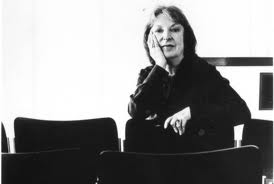
The Library of America is finally bringing out a collection of Pauline Kael’s selected writings, The Age of Movies.  It will be interesting to see how Sanford Schwartz’s selection compares with For Keeps, the anthology that Kael published not long after her retirement in 1991.   Kael’s personal selection was organized chronologically except for the book’s first piece — Hud: Deep in the Divided Heart of Hollywood.  This is one of my favourite Kael essays, though not necessarily for what she has to say about Hud.  I think it says a lot about the way in which Kael appeals to readers, while simultaneously infuriating film-makers and her detractors.    The latter would no doubt say that such a piece is all about Kael.  But she was actually quite sparing with her autobiographical reminiscences, which consequently made me want more.

 “The summer nights are long on a western ranch.  As a child, I could stretch out on a hammock on the porch and read an Oz book from cover to cover while my grandparents and uncles and aunts and parents didn’t stir from their card game.   The young men get tired of playing cards.  They either think about sex or try to do something about it.  There isn’t much else to do—the life doesn’t exactly stimulate the senses…

My father who was adulterous, and a Republican who, like Hud, was opposed to any government interference, was in no sense and in no one’s eyes a social predator.  He was generous and kind, and democratic in the western way that Easterners still don’t understand: it was not out of guilt or condescension that mealtimes were communal affairs with the Mexican and Indian ranch-hands joining the family, it was the way Westerners lived.”

Notice how Kael’s voice pulls you in?  It reads like fiction — the beginning of a short story, perhaps.  It would not be out of place in Joan Didion’s Where I Was From, which is ironic given Kael’s put-down of Didion’s style in her review of the film adaptation of Play It As it Lays.  I also think it’s a lovely example of what David Shields, in his book Reality Hunger, refers to as “critical intelligence in the imaginative position”.

—MM

PREVIOUSLY…ON KEN LOACH

Few directors have been as consistent as Ken Loach in addressing present day realities.  His six-decade long career constitutes a long-running and ongoing dialogue with contemporary Britain and its place in the wider world, as though Loach himself was a kind of prestigious television serial or public broadcast service: Previously on Ken Loach.  I’ll resist calling him a brand—that would be too much for this man of the left—but with Loach you know what you’re going to get.

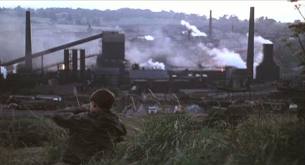
From the start Loach’s films were aligned with the working class (Cathy Come Home, Poor Cow, Kes). As such, he is the dominant figure in British social realism.  It would be easy to call him an institution were it not for the fact that he seems immune to such praise.  But there is no escaping the fact that Loach is a big-name director.  What is most remarkable is the absence of any vanity.  Loach’s directorial reticence is both his signature and his strength: the unobtrusive camera, the unadorned style, the feeling for people and place.  He has a documentary maker’s eye and a dramatist’s heart.  In that regard, he reminds me of Elia Kazan.  But whereas Kazan made stars of the wounded, Loach’s people are all too human.  So while Ricky Tomlinson (Riff Raff, Raining Stones) or Martin Compston (Sweet Sixteen) are rightly praised for their performances in Loach’s films, it is their characters’ stories that we remember afterwards: people not stars.  Some might disagree. Film critic Mark Cousins argues convincingly that cinema as a medium is inherently right-wing, and that leftist filmmakers cannot help but be affected, even Loach: “Loach’s minimally lit and designed films make heroic the Peter Mullens, Crissy Rocks and Robert Carlyles of their stories.”  But making heroes is not the same as making stars, and the left has always loved its heroes. I’d daresay Loach is one of them, but this most self-effacing of great directors would probably tell me to bugger off. Even his political epics (Land and Freedom, The Wind That Shakes the Barley) are shorn of grandeur.  Loach’s subjects are, of course, important to him—close to his heart—but his style is strictly lower-case.

—MM

THE TREE OF LIFE—A Death in the Family


Terrence Malick’s The Tree of Life feels as though it has been made with a great sense of freedom.  I agree with A.O. Scott’s remark in his NY Times review that “To watch ‘The Tree of Life’ is, in analogous fashion, to participate in its making.  And any criticism will therefore have to be provisional.”  So provisionally I would say that it’s like a home movie, albeit the most expensive of its kind.  (It’s also like a dream.) The camera stays close to the actors—like a dad with his Super 8—but the actors lead the way.  Malick’s cinematographer, Emmanuel Lubezki, understands and anticipates movement with a sure sense of how something might cut together.  In that regard, it’s like an improvised dance film.   The sense of freedom is so great that it begs the following questions: Was there even a script, and if so, what did it look like?  What did the rehearsal / shooting process entail?  What constitutes the offer of a role for an actor in a TM film? And for that matter, what constitutes character? I would not be surprised to discover that there were only notes or ideas for scene.  For the film is surely process-led.  Not that the means of its making should matter—not in the end, anyway: it is what we’re left with that counts.   And what we’re left with in this instance, I would say, is a very personal film—autobiographical by all accounts—ostensibly about grief. I found it compelling, and in places very moving. Yes, the birth of creation is in there too, but to me that’s just conjecture, and Malick is free to make it, whereas the grief is palpable.

In Malick’s films people are at the mercy of the elements, mental weather included. In The Tree of Life, a middle-aged man (Penn) remembers his childhood in Waco, Texas in the 1950s.  He is still trying to come to terms with death of his younger brother, a death we never see.  He looks haunted (and Penn looks suitably ravaged).  We gather that Jack is an architect.  There are sketches of scenes in, presumably, Jack’s offices, a gleaming, glass-fronted tower in present-day Austin, Texas.  And these scenes really are sketches, the closest the film comes to a form of conventional exposition.  We see him point to blue-prints and take calls.  We see him in an apartment with a woman.   But he inhabits neither of these spaces: he is a ghost of his own life.  But the soul of the film—if a film can be said to have a soul—exists in Jack’s remembrance of childhood: his domineering but no less loving father (Brad Pitt), his beautiful and graceful mother (Jessica Chastain), and his two brothers.  This, to me, is the richest section of the film, and the most moving. And to remember it afterwards, in analogous fashion, is to participate in its protagonist’s consciousness.

Of course, that is only a nominal description of what the film is about, with the emphasis on synopsis, and the chronology ironed out.  What it is is another matter.  It is common-place for filmmakers to say that films are written three times: at the writing stage, obviously; during shooting; and finally—and perhaps, most importantly—in the editing.  I’d guess that Malick found his film during shooting and continued to find it right up until it was locked.  (Perhaps for Malick there was a reading stage–a lifetime of reading!) There is barely a conventional scene in it, and you can kiss goodbye to the notion of a three-act structure.  With his elliptical style at its most extreme, Malick’s film “flashes by” in a ribbon of images, presumably as a way of putting us inside Jack’s head: “Unless you have loved, your life will flash by”. We move from childhood to adulthood in a cut, and back again. (It is simultaneously fragmented and continuous.)   I love the way Malick’s film rustles into being, its sense of immediacy: a girl looking out of a barn window onto a field, the marriage of image and music, the sense of wonder at the world.  At its rhapsodic best, it floats free of its baggage—the profundity of its themes, the fame of its stars, the weight of (our) expectation.   It held me from beginning to end. Not that I went with everything.  The much talked about dinosaurs, for example, left me puzzled. But this was more to do with how they are rendered on screen than any philosophical inquiry on the part of Malick.  The CGI seems at odds with a filmmaker who is a natural with natural light and relishes the unplanned and unforeseen.

—MM

ANIMAL KINGDOM—the Glamour and the Grunge


In his book ‘Cultural Amnesia’, Clive James writes that “the atmospherics of Michael Mann’s Heat affect the look of any movie made about crime: other directors, whether working out of the United States, Latin America, Europe or Hong Kong, either go with him, towards glamour, or go against him, towards grunge, but they always have his look in mind.”  There’s more than a touch of Heat to David Michôd’s Animal Kingdom, especially in its depiction of an armed robbery unit that is as wild and lawless as its quarry.  It also has that city-at-night feeling which Mann is so attuned to, though in this instance the city is Melbourne. But despite its cinematic influences (Goodfellas, Magnolia), Animal Kingdom is rooted in the real.   Michôd has spoken in interviews of wanting to “make a film that unlike, say, a Quentin Tarantino or Guy Richie crime movie, took itself seriously, and was set within a big, dark, nasty world, which was nevertheless still quite poetic and beautiful.”  In other words, Michôd goes for the glamour and the grunge.

From its stark opening (it begins with a bark) to its final confrontation (it ends with a bang), Animal Kingdom more than justifies its grand and arresting title. In its native land, it has been called “the Australian Godfather”, and one can see why: a terrific cast at the top of their game; a brilliant script which takes the sequence as its dramatic unit; a family drama in which the family’s youngest (and most innocent?) must make his way in the world.  Where it differs from The Godfather is in its sense of scale and ambition.  But then Michôd’s crime family is not as organised, nor as operatic, as Coppola’s: the Cody’s are not the Corleones, though what they lack in grandeur they more than make up for in their propensity for violence, betrayal, and incestuous feelings.

The film is loosely based on an actual incident in Melbourne’s recent history known as the Walsh Street Killings. But while Michôd uses this incident to ignite the film’s plot, he is after bigger game.  Like the recent Winter’s Bone, Animal Kingdom is about survival. Its teenage protagonist, Josh, must negotiate the perilous terrain of family—or at least his family.  His notorious uncles and grandmother, to whom he turns after the death of his mother, provide Josh with an unsentimental education: “We take it out on whoever turns up.  That’s what we do.”  It is left to Guy Pearce’s homicide detective, and the film’s moral centre, to guide Josh as best he can.  It is Pearce who supplies us with the film’s metaphor of the “animal kingdom”, telling Josh:”You’ve survived because you’ve been protected by the strong, but they’re not strong anymore.”

In case we were in any doubt about Michôd’s intentions, the film is full of bracing scenes in which the strong and the cruel survive at the expense of the vulnerable. Time and again we see goodness expunged, innocence corrupted. Watch how Michôd fixes on the smooth and youthful complexion of a rookie cop, his good manners, and his by-the-book approach as he responds to the report of a stolen car. This is just one of several extraordinary sequences. Already you sense that Michôd is one of those “sprinkler on the lawn” directors who can summon dread from the sweetest of sights. And unlike Josh, the influences that have shaped him (Scorsese, Mann, P.T. Anderson) have been all to the good. Josh has been raised by wolves and acts accordingly.

—MM