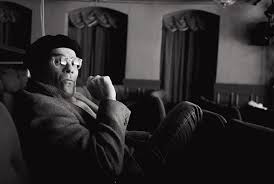
A profile of Kent Jones

Kent Jones is not the first film critic to turn filmmaker. But as director of the New York Film Festival, a role he has held since late 2012, Jones’s increasingly prolific output behind the camera can, on occasion, put him in an awkward position. He has already had to recuse himself from the selection process due to his creative involvement on one film under consideration—Arnaud Desplechin’s Jimmy P, on which Jones shared a screenplay credit. But with his new film, Hitchcock / Truffaut, Jones took the matter out of the selection committee’s hands. As he told me last summer, between announcements of the festival’s main slate, “This film can’t get near this festival. It’s just that simple. How can I possibly look a documentary filmmaker, or any filmmaker, in the face and say ‘Sorry, I’m going to show my movie but yours isn’t good enough?’”

Given the film’s subject matter—the meeting of Alfred Hitchcock and Francois Truffaut in 1962 that yielded one of the great books about cinema—this might seem harsh on New York’s committed cinefile audiences. But Jones’s integrity as a programmer is consistent with his modesty as a critic, a modesty which in no way negates his passionately held positions. (He took Tarantino to task for slighting John Ford.) As a critic, Jones, to paraphrase James Wood, does not show a lot of plumage towards his subject: he is not in competition with the film under discussion. In this he follows in the footsteps of two film critics whose names crop up several times during our conversation, Andre Bazin and Manny Farber.

It was Bazin, founder of Cahiers du Cinema, who provided a stage for the most notable critics-turned-filmmakers in the history of cinema, and a rare moment, says Jones, of a critical fraternity with Bazin framed as “this genius dying of leukaemia surrounded by these younger men…on their way to taking their writing and using it as a declaration.” Those young men—Francois Truffaut, Jean-Luc Goddard, Claude Chabrol, Eric Rohmer, and Jacques Rivette—were instrumental in elevating the artistic reputations of Hollywood directors who had previously been considered light entertainers, Hitchcock being a case in point.

Manny Farber had been doing much the same thing: writing about the unseen merits of American filmmakers, though long before La politiques des auteurs made its way across the Atlantic in the guise of Andrew Sarris’s Notes On the Auteur Theory. Jones, who was born in 1960, was a teenager when he discovered both Sarris’s The American Cinema and Farber’s Negative Space, books that would affect him in different ways. “With Andrew the impact was immediate. It was [his] hierarchies and categories that got me. Because the whole idea what is a director—that’s interesting, you know. And then [Negative Space], that’s something else. For years I would crack it open every once in a while and look at it. I had no idea what the fuck this guy was talking about. But I am intrigued. At a certain point it clicked. If you understand that writing is a matter of rhythm, and that a writer is engaged in rhythm and not just the translation of thoughts into language then you’re dealing with writing. With Manny as opposed to 90% of other critics—Pauline Kael being an exception—you’re thrust into the deep-end of rhythm right away. I related to him much more than Pauline Kael.”

The lone wolf of American film criticism, Farber emerged out of one tradition of American critical prose—he replaced Otis Ferguson at the New Republic and James Agee at Time respectively—but ended up in an altogether different place. Susan Sontag called him “the liveliest, smartest, most original film critic [America] ever produced”, and in her landmark essay Against Interpretation praised him for his ability to describe films in terms of their surface and texture. But then Farber was a terrific painter who came at movies with an innate sense of the visual, and an understanding of how something is put together. If Jones has sought to emulate (though never imitate) anyone, it is Farber, as much for his approach (detail-oriented and exhaustive) as well as his style.

Jones is not a weekly reviewer as such, so he is spared from having to write about everything he sees. At Film Comment, where he is also deputy editor, he is blessed with a long lead-in time and given ample space to cover the ground of a given film or filmmaker. (And covering the ground was a Farber imperative.) His pieces are rigorous, serious without being dry, and often richly conceived. He can evoke a film’s mood or a director’s style in a sentence, which in the case of Sofia Coppola amounts to the same thing:

“Sofia Coppola is uncommonly gifted at the articulation of something so fleeting and ephemeral that it seems to be on the verge of evaporating on contact with her hovering, deadpan, infinitely patient camera eye.”

One can see that Jones has also been rigorous about his choice of subject matter: critical appreciations of leading contemporary filmmakers (Hou Hsiao-hsien, Claire Denis, Wong Kar-wei, Abbas Kiarostami, and Lucretia Martel) account for over half the pieces in Physical Evidence, his debut collection. When he began writing for Film Comment, in 1996, articles about ‘the death of cinema’ were very much in the air. But as far as Jones is concerned, the medium is still in its infancy, still vital. The writer Phillip Lopate, who included one of Jones’s essays in the Library of America’s American Movie Critics anthology, calls him “…the film critic most alive to this moment”.  Physical Evidence, published in 2007, was proof enough, but in the years since Jones’s writing has grown in authority, while his newly divergent path as a filmmaker (he co-wrote Martin Scorsese’s My Voyage to Italy and A Letter to Elia) has perhaps permanently marked his approach to writing criticism. “Making films has changed my criticism in the sense that—and I really started to think this a long time ago, and my opinion has only grown stronger as the years have gone by—that 90% of film criticism is just divorced from the actual practice of making movies.”

In terms of the position Jones presently occupies within contemporary film culture, he reminds me of Mark Cousins: wearers of multiple hats, both have run major festivals; each are quick to challenge critical orthodoxy and / or received wisdom; and while they are devoted students of film history, they are always making the case for cinema now. And as with Cousins, it’s clear that each activity—writing, programming, and making films—feeds the other. “There’s rhetoric about keeping stuff alive and making sure that people remember the past, or that they get to experience a film that they wouldn’t be able to see elsewhere. But really, it’s not about that in terms of the [programming] choices or in terms of the writing. If it were then it would make for a very dull film festival; it would make for very dull writing. I wouldn’t want to read it. I can’t stand it when people say to me: ‘I support this film for these reasons.’ Why bother?”

This uncompromising and passionate approach informs Hitchcock / Truffaut, which like Jones’s criticism, is deeply engaged and carries no extraneous weight. Jones is neither seen nor heard—there’s that modesty again—but then he doesn’t need to be. His material is gold, and he knows it. Truffaut’s book was the culmination of a kind of pursuit and an artistic debt repaid, with Hitchcock flattered and bemused, as well as moved, by the younger man’s ardour and attention. What strange path led Truffaut to Hitchcock? Well, Jones answers that too. And through the use of the original audio tapes, their voices can now be heard. Nuance, lost to the inevitable limitations of translation and transcription, is restored. We hear for ourselves how Hitchcock’s curiosity about Truffaut’s comfort with actors and improvisation led to his famous remark “actors are cattle”. It sounds far more benign on tape than it looks in print. Hitchcock, in effect, is rescued again.

But Jones opens up—extends—the conversation in another way. By turning to those filmmakers who devoured and absorbed its contents as though it were a sacred text, the film reveals the extent of the book’s (ongoing) impact—on Hitchcock’s reputation and those who followed in his wake. As you’d expect, Jones’s long-time collaborator Scorsese is on hand to talk about the book’s radicalising effect on his generation. But no less illuminating are Peter Bogdanovich, himself a great critic, Paul Schrader (ditto), Olivier Assayas, David Fincher, Richard Linklater, and Wes Anderson.  Fincher is particularly good on Hitchcock’s mastery of time and space. He also mischievously wonders how a DeNiro, Pacino, or Hoffman might have flourished under Hitchcock’s “iron umbrella”.

Jones, who writes with great insight about actors and acting, believes that Hitchcock was aware of the shifts that had taken place in American film post-Brando and “the Method”, or as Jones puts it—“the exultation of acting as an event in and of itself.” But like many of Hollywood’s old-guard, Hitchcock struggled to accommodate the modern actor’s quest for authenticity: directorial design trumped motivation; his process trumped theirs.  And the struggle made for an interesting tension in Hitchcock’s films, particularly in the era of arguably his greatest work.

Says Jones: “Hitchcock arrived at this moment—and how did he deal with it? By taking an actress who was involved in that kind of thing, Eve Marie Saint, but making her into something else; by finding Tippi Hedren. Taking Bruce Dern and not really doing much with him that was that adventurous. And I think that when the younger generation—Marty, Paul Schrader, Spielberg—came along, what made their films feel different was that they responded to that reality. It’s like when the Velvet Underground came along and they mixed the drums up front, and the guitars in the background. Suddenly the acting occupied a different position in the film.”

I get the impression that Jones could talk about cinema all day, and probably does. But he has a festival to run, and I have a plane to catch. Before I leave, I quote a passage from Randall Jarrell’s essay The Age of Criticism:

“Remember that you can never be more than the staircase to the monument, the guide to the gallery, the telescope through which the children see the stars. At your best you make people see what they might never have seen without you; but they must always forget you in what they see.”

Jones agrees. “I think that that’s generally true. I think it’s true of criticism in a very particular way. When the critic becomes the central event, they’re not writing criticism any more. So Manny—and I’ve quoted this many times—he said the idea is to get yourself out of it so that the object itself takes on religious awe. It also rhymes with Bazin—prolonging the original shock of the work of art.”

And this is where Hitchcock/Truffaut succeeds—as both a movie and as an example of criticism in action. As the film builds towards the peaks of Vertigo and Psycho, the conversation stops, and Jones returns to those images and moments that have lost none of their power. Kim Novak, say, emerging remade before James Stewart’s eyes, her appearance filtered through that strange, vertical shaft of aqua green light.  A moment that best explains, but never quite reveals, itself. And we forget we are watching a documentary ostensibly about a book, a movie about cinema, but one that effortlessly, passionately—and modestly—achieve Bazin and Farber’s critical objectives.

—Mick McAloon

To read the full interview go to http://anosamoursblog.weebly.com/blog/june-08th-2016
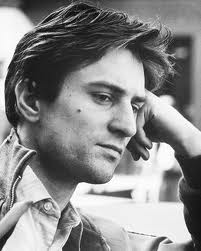
Program Notes: Julianne Moore

Julianne Moore had already won an Emmy for her work in television by the time Hollywood caught up with her. A supporting role in The Hand That Rocks the Cradle (1992) received stand-out reviews, but her real breakthrough came in The Fugitive (1993), where she played a doctor suspicious of Harrison Ford’s strange behaviour. Utilitarian in blue scrubs, and on screen for less than five minutes, Moore’s resolute presence still registered within the confines of a ‘wrong man’ pursuit. She stood out again in a fine ensemble cast in Robert Altman’s Short Cuts (1993), a portmanteau of Raymond Carver stories transplanted to LA. In one scene, a marital argument with co-star Matthew Modine, Moore appeared naked from the waist down, drawing accusations of prurience on the part of Altman. But Moore was undaunted by the level of intimacy the scene was really about, and, as she’s repeatedly shown, emboldened by challenging material. The underwriter of her own risks, Moore early on established a pattern of working that continues to this day: roles in Hollywood movies offset by candid portraits of troubled women in films by auteur directors.

Vanya On 42nd Street (1994) began as an Andre Gregory/Wallace Shawn theatre project in 1989, but was transformed by Louis Malle into an unusual hybrid: a rehearsal of ‘Uncle Vanya’ that turns into a full-on performance. Moore won Best Actress at the Boston Society of Film Critics’ Awards, as well as the attention of a new wave of American filmmakers. In Todd Haynes’s Safe (1995), a suburban, existential horror film, Moore seemed to collapse in on herself as her character succumbed to ailments real and imaginary; while in Paul Thomas Anderson’s Boogie Nights (1997), she was maternal and bereft as a 70s porn star in the San Fernando Valley. The Coen brothers were next, with The Big Lebowski (1998), where Moore infiltrated the Dude’s (Jeff Bridges) bowling pin dreams. Of all Magnolia’s (1999) desperate characters, Moore’s anxious young wife seemed the most attuned to the film’s looping hysteria. Besides, her presence in Anderson’s sprawling LA story acknowledged the film’s debt to Short Cuts—though this time Moore remained in a fur coat throughout and still appeared naked. She was glamourous, God-fearing and guilt-ridden in The End of the Affair (1999), and perfectly at home in the Nova Scotia setting of The Shipping News (2001). But her finest performances of the new decade came in The Hours (2002) and Far from Heaven (2002), where Moore encapsulated the despair of two 1950s housewives, and in the process was nominated for Oscars in leading and supporting categories.

A ‘supporting actor’ in the best sense of the term, Moore is by now such an established figure that her presence immediately enriches a project, whether mainstream  or ‘independent’. Soulful, incandescent and fearless, Moore is once again in contention for Best Actress for her performance in Still Alice (2014).

—Mick McAloon

Notes on actors: Marlon Brando

As Stanley Kowalski in the original stage version of A Streetcar Named Desire in 1947, Marlon Brando forever altered the landscape in American theatre and film. Often cited as the leading exponent of “the Method”, the acting system derived from the teachings of Stanislavski, and promulgated in America by Lee Strasberg, what Brando had—or possessed—could not be schooled. Even though he had studied with acting coach and Group Theater breakaway Stella Adler, the nature of Brando’s gift was too large, too poetic, and ultimately too mysterious to be attributed to any one movement. David Mamet was right to surmise that a talent like Brando would have succeeded anyway—regardless of the gurus who sought to claim his success a result of their expertise as opposed to his.

Born in Omaha, Nebraska in 1924, Brando was educated at Shattuck Military Academy, where he was expelled for insubordination—an early warning—though not before impressing in a school production. There had already been intimations as to where his future might lie: Brando’s older sister had moved to New York to pursue an acting career; his mother had been a member of the Omaha Community Playhouse, where she had appeared onstage with Henry Fonda. After expulsion from Shattuck, Brando briefly returned home before joining his sister in New York, where he attended Erwin Piscator’s Drama Workshop at the New School. It was here, in a class that included Rod Steiger and Shelley Winters, that Brando met Stella Adler. On seeing Brando for the first time, Adler is reported to have said: “Who’s the vagabond?” As first responses go, Adler’s is remarkable in that seemed to intuit what future audiences would feel—or a variation thereof—whenever Brando appeared on stage or on screen. In her review of Last Tango in Paris (1972), Pauline Kael writes fondly of seeing Brando in what was only his second Broadway production, Truckline Café, in 1946: “…the young man who brought me grabbed my arm and said “Watch this guy!…” We’ve been watching him ever since.

He made his screen debut with The Men (1950), as a returning war veteran and paraplegic. In what was considered unusual practice at the time, Brando spent weeks at a veterans’ hospital in an attempt at understanding as well as verisimilitude. His performance was warmly reviewed, but the film was a disappointment at the box office. Still, Brando had made his mark. He followed with the movie version of A Streetcar Named Desire (1951), directed by Elia Kazan, the play’s original director and Brando’s most vital collaborator. Tennessee Williams’s poetic masterpiece was always too florid for the screen, but Brando is still electric. And as the closest thing we have to a record of his famous Broadway performance, it should be cherished.  Something in the clash of acting styles—Vivien Leigh’s theatricality, Brando’s immediacy—suited the material and brought out the conflict in Williams’s drama: the old world versus the new. Stanley Kowalski may have been a brute, and Brando had access to all his uncouthness and vulgarity, but there was something about his presence—deeply masculine, strangely feminine, a poetic delicacy always beneath the surface—that seemed if not to subvert the archetype then to co-exist within it. Perhaps it was a matter of Brando’s extraordinary physiognomy, combined with casting that was simultaneously ideal and contradictory. For Brando made Stanley interesting and not just alluring, which ran counter to the playwright’s intentions. Williams envisaged Stanley as a meathead, comfortable in his own skin, but without a trace of sensitivity or a flicker of poetry in his soul—qualities that Brando had in abundance. And it was these qualities and contradictions that coalesced around Brando’s film appearances in the early 1950s. In his own way, Brando opened the door for a subsequent generation of rebels—James Dean, Elvis Presley, and Bob Dylan. But those genuine American firebrands could never be confused with the biker rebels in The Wild One (1953). Laslo Benedek’s film was dated even before the cameras rolled, though its iconography remains potent, if only for t-shirts and bedroom walls.

Viva Zapata (1952) and Julius Caesar (1953) saw Brando extend his range, doing John Steinbeck and Shakespeare respectively. But in On the Waterfront (1954), and back with Kazan, he gave one of his greatest performances. As ex-fighter and longshoreman Terry Malloy, Brando exemplified “the Method” at its most poetic. Two scenes in particular are justifiably lauded: Brando picking up Eve Marie Saint’s glove and putting it on his hand—a moment of improvisatory genius; while his “contender” speech in response to his brother’s betrayal remains one of the most moving and memorable scenes in cinema: “It was you, Charlie. It was you.” Martin Scorsese and Robert DeNiro would pay tribute to this scene in Raging Bull (1980), though they refrained from the emotion so evident in Brando’s delivery. Pauline Kael called Brando’s speech “the great American lament…” after she’d been quick to claim him as “our most powerful young screen actor, [and] the only one who suggested tragic force…” In hindsight On the Waterfront can be seen as the culmination of Brando’s genuine engagement with Hollywood, and the precise moment he delivered on the promise of his Broadway arrival. After three successive Academy Award nominations (1952-1954), he won Best Actor, as though anyone needed to be told.

Brando himself became indifferent towards acting and ambivalent about fame. He made some poor choices, though he was still capable of a surprise like Guys and Dolls (1955). He directed himself in One-Eyed Jacks (1961) after falling out with—and firing—Stanley Kubrick. But directors who fit the Kazan mould, such as Sidney Lumet and Arthur Penn, and who had come up through the theatre and live television, elicited something like his best work: The Fugitive Kind (1959), and The Chase (1966).

But then in the early 1970s, Brando made a spectacular comeback. The Godfather (1972) reaffirmed his status as America’s greatest actor, while forever linking him to the generation he had inspired—Al Pacino, James Caan, and, by way of his young Vito Corleone in The Godfather, Part II (1974), Robert DeNiro. Last Tango in Paris (1972) saw Brando at his most naked and personal before he withdrew from public life altogether, aside from the occasional cameo or supporting role in films such as The Missouri Breaks (1976), Superman (1978), A Dry White Season (1989) and The Freshman (1990). His final film was The Score (2001), with DeNiro and Edward Norton. But his last great film was Apocalypse Now (1979), where Brando’s rogue colonel anticipated the actor’s self-imposed exile from the profession he had done so much to redefine.

—Mick McAloon

Program Notes: Amy Adams

One of Hollywood’s most versatile actors, all of Amy Adams’s transformations emanate from within. For the most part recognizable from film to film, it’s as if Adams is forever divesting herself of unwanted layers. Over the course of her career, and in her most revealing work, the masks keep falling away.

She made her screen debut in Drop Dead Gorgeous (1999), and followed it with supporting roles in long-running television shows: Buffy the Vampire Slayer (2000), Smallville (2001), and The West Wing (2002). She seemed on the verge of a breakthrough as Leonardo DiCaprio’s girlfriend in Catch Me If You Can (2002), and the first time she was paired with a major director (Steven Spielberg). She lent her voice to multiple characters in King of the Hill; and was a sister to Debra Messing in The Wedding Date (2005). But it was not until Junebug (2005) that she gave the sense of having truly arrived. The role of Ashley, an unworldly and pregnant young wife, tapped into those qualities that appear genuine and integral to Adams herself: wholesome and good. But her character was also very complex, and within the film’s family dynamic—a successful brother returning to his family home with his sophisticated wife—Ashley understood, or at least intuited, more than she was letting on. Adams won a prize at Sundance, as well as outstanding reviews, and received the first of her Academy Award nominations—for Best Supporting Actress. She returned to television, with a role in The Office (2005-2006), and then took on an out-and-out and comedy, Talladega Nights (2006), with SNL alumni Adam McKay and Will Ferrell. But then with Enchanted (2007), Adams drew on her musical theatre background and embraced the challenge of a Disney live action/ animated adventure: her Disney princess, Giselle, was an unadulterated delight.

By now her range was becoming apparent and her ascension to the A-list inevitable. A supporting role in Charlie Wilson’s War (2007) paired her with Philip Seymour Hoffman for the first of three films together. Doubt (2008) saw her conflicted and on shifting moral ground as a young nun caught between Hoffman’s priest and Meryl Streep’s bitter principal, Sister Aloysius. In The Fighter (2010), her Boston-Irish barmaid was just as tough as Mark Wahlberg and the quiet centre of David O. Russell’s voluble film. She took a supporting role in On the Road (2012), and was arguably the most interesting and least explored character in The Master (2012), which saw her back with Hoffman. There, as in all her best work, Adams’s complexity clouds the outer disposition that is sunny and bright—her musical theatre optimism. It is this capacity that leads many of her directors to entrust her with the emotional centre of their films. That is certainly the case in American Hustle (2013), even in a cast with mesmerizing (Christian Bale) and firecracker talent (Jennifer Lawrence). Transparent in the best sense of the word, Adams’s vulnerability is perhaps her greatest strength.

—Mick McAloon

Program Notes: Harvey Keitel

The unacknowledged patron saint of first-time directors, Harvey Keitel has given his blessing to a remarkable array of embryonic talent. Starting with Martin Scorsese in 1965, Keitel’s extraordinary run of luck extends across four decades. Other filmmakers to feel the benefit of his participation in their inaugural projects include: Paul Schrader, Ridley Scott, James Toback, and Quentin Tarantino. Whether Keitel considers himself lucky is another matter. A student of myth, Keitel’s career—or journey—has been defined by its openness to risk and experience. If it is hard to imagine other actors in Keitel’s signature roles—in the “personal” films of some of the above directors, as well as those of Abel Ferrara and Jane Campion—then that is surely down to the nature of Keitel’s performances and the sense that he has spared nothing of himself. At his most fearless, Keitel is the embodiment of William Hazlitt’s maxim: “actors are the only honest hypocrites.”

In 1965 Keitel was working as a court stenographer when he saw an ad in a trade paper. An NYU student was looking for an actor for what was then intended as a graduation project. The student was Martin Scorsese, and the film—four years down the line—would go on to become the director’s first feature, Who’s That Knocking at My Door (1969) Although the film did well on the festival circuit, its real significance lay in its fraternal pairing of actor and director. Raised in different boroughs, under different faiths, the two New Yorkers had enough of a shared background to realise Scorsese’s Lower East Side story. A bond was forged.

Mean Streets (1973) saw Keitel reprise his role as Scorsese’s alter ego, making up for his sins not “in the church but on the street.” He appeared in Scorsese’s next two films, Alice Doesn’t Live Here Anymore (1974) and Taxi Driver (1976). The latter took him away from Scorsese’s neighbourhood streets, seemingly forever, and closer to hell, or at least Hell’s Kitchen. Exchanging one inferno for another, Keitel began to show his range and his appeal to first-time directors: he was undaunted by difficult material. The films he made with Ridley Scott (The Duellists 1977), Paul Schrader (Blue Collar 1978) and James Toback (Fingers 1978) represent a high-watermark in Keitel’s career. By comparison the 1980s were something of a fallow period, though he emerged from the wilderness with the role of Judas in Scorsese’s The Last Temptation of Christ (1988). He began the next decade alongside Jack Nicholson in The Two Jakes (1990), though the much anticipated sequel to Chinatown (1975) performed poorly at the box office. But then Keitel embarked on a terrific run of films: Thelma and Louise (1991), Bugsy (1991), Bad Lieutenant (1992), Reservoir Dogs (1992), The Piano (1993), Pulp Fiction (1994), and Smoke (1995). And with recent roles in Moonrise Kingdom (2012) and The Grand Budapest Hotel (2014), he seems to have found a place in Scorsese devotee Wes Anderson’s repertory company—a home from home.

—Mick McAloon

Program Notes: Gary Oldman

Gary Oldman led the way for a generation of British actors—among them Daniel Day-Lewis, Alfred Molina and Tim Roth. Schooled in the theatre, Oldman and his coevals claimed as their rightful inheritance the screen legacy of the “Method”, thus extending a line of influence that runs from the Moscow Art Theatre to British film in the 1980s and beyond. What happened in between—the formation of the Group Theatre and the subsequent emergence of the Actors Studio—was crucial to this development, as were the remarkable films that came out of the New Hollywood, and especially the work of Robert DeNiro.

Like DeNiro, Oldman was capable of extreme physical transformations. Already a versatile and award-winning stage actor, Oldman enhanced his reputation with a run of films that showed a talent for deep immersion. He made his screen debut in Remembrance (1982), followed by a supporting role, alongside Tim Roth, in Mike Leigh’s Meantime (1983). The latter hinted at Oldman’s capacity for danger and volatility, albeit with an innate sense of comic timing—qualities that would go on to serve him well. But it was his performances as Sid Vicious, in Sid and Nancy (1986), and as Joe Orton in Prick Up Your Ears (1987), that Oldman revealed the depth and range of his talent. Putting flesh on the bones of biography, Oldman went beyond impersonation. The distinctive manner in which he inhabited both punk and then playwright led Roger Ebert to hail Oldman as “the best young British actor around.” With his ear for accents and a great vocal facility, Oldman now laid claim to roles that previously would have gone to an American. His migration to Hollywood was inevitable and desired, though the films he made on his arrival, Criminal Law (1989) and Chattahoochee (1989), were unremarkable.

Not that Oldman had finished with England. In Alan Clarke’s The Firm (1989), he was exuberant, menacing and funny as an estate agent-cum-football hooligan. He brought the same unpredictability to his Irish-American gangster in State of Grace (1990), which saw him go head to head with Sean Penn. Both actors had drawn from the same wellspring of artistic influence, though it was Oldman who landed eye-catching roles in films by Oliver Stone and Francis Ford Coppola. In JFK (1991), Oldman vanished into the void that was Lee Harvey Oswald; while as the lead in Bram Stoker’s Dracula (1992), he lowered his voice an octave and made the “undead” soulful in perpetuity.

For the rest of the 1990s, Oldman lit up big budget movies with extravagant star turns and in the process typecast himself. But he delved deep for the autobiographical Nil By Mouth (1997), his directorial debut and return to South London roots. Benevolent but pivotal roles in two franchises, Harry Potter (2004 – 2011) and The Dark Knight (2005 – 2012), established his cumulative box office eminence. And as George Smiley in Tinker Tailor Soldier Spy (2011), both actor and spy came in from the cold.

—Mick McAloon

Program Notes: Sean Penn

Sean Penn arrived in American movies fully formed and iron willed. Confident and charismatic from the start, he drew early comparisons with Robert DeNiro, his most significant influence as an actor. Unfortunately for Penn, he came of age when American cinema was in the doldrums. High concept movies, exemplified by Don Simpson and Jerry Bruckheimer, ruled the day and defined the era, while the “personal” auteur-driven films of the previous decade found fewer champions in a Hollywood underwritten by multi-national conglomerates. Still, Penn flourished in a way that seemed to be entirely self-generating, his intransigence apparent from his big-screen debut in Taps (1981). Penn stood out in a cast that included George C. Scott, Timothy Hutton (fresh from an Oscar win), and Tom Cruise in what was only his second movie. If Cruise went on to enjoy spectacular box office success, Penn, with his roiling complexity, was quickly regarded as the best actor of his generation. Pauline Kael singled him out as early as Bad Boys (1983): “Each time, Penn comes as a complete surprise.”

He had already demonstrated his range with an influential comedic turn in Fast Times at Ridgemont High (1982), a rare feat in itself for a heavyweight talent conscious of his place within a tradition of sullen but poetic American actors: Brando, Clift, and Dean. But what Penn the tragedian needed—great material, a Scorsese to his DeNiro—was simply not there. Instead he gravitated towards mavericks and mentors, befriending John Cassavetes, Marlon Brando, and Dennis Hopper, while conspiring to act opposite the previous generation’s best actors. One by one they all lined up, as though at a passing-out parade: Christopher Walken in At Close Range (1986), Robert Duvall in Colors (1988), DeNiro in We’re No Angels, and Pacino in Carlito’s Way (1993). And on each occasion Penn acquitted himself. The torch had been passed, and then he threatened to quit acting altogether in favour of directing.

But his absence only seemed to incite a clamour for his return. He began to work with directors deserving of his talent: De Palma, Fincher, Malick and Woody Allen. He was nominated for an Academy Award for his work in Dead Man Walking (1995), directed by his fellow actor-turned activist Tim Robbins. He received another nomination for his egotistical though oddly endearing jazz guitarist in Woody Allen’s Sweet and Lowdown (1999). Here Penn offered a rare instance of an actor dominating an Allen script without recourse to Allen’s mannerisms. He won his first Oscar for his performance in Mystic River (2003), where he was turbulent and vengeful, as well as tender. And then in Milk (2008), as the eponymous gay rights activist and politician, Penn reminded audiences that he could be light on his feet and no less sorrowful. In recent years acting has taken a back seat to his own activism and humanitarian aid work. But he “suited up” again for This Must Be the Place (2011) and Gangster Squad (2013), where he blazed brighter than the pyrotechnics.

—Mick McAloon

Program Notes: Gena Rowlands

Gena Rowlands is best known for the remarkable films she made with her husband John Cassavetes. Although she appeared (uncredited) in Shadows (1959)—Cassavetes’ astonishing debut—and had a supporting role in A Child is Waiting (1963), it was not until Faces (1968) that their collaboration began in earnest. Gena’s is the first face we see after that film’s post-title sequence: closer than close-up, looking straight into the camera, and every inch a movie star. The grain and gauge of the film is like one of Warhol’s Factory movies—unvarnished, black & white, 16mm—but Rowlands’ face, presence and beauty evokes 1950s Hollywood glamour. She once told a journalist that without Cassavetes her career “might very possibly have been doing Pillow Talk…” But Rowlands was always closer to Bette Davis (her idol) or Gloria Grahame than to Doris Day: the glamour came with an edge. What Rowlands said of Davis applies equally to her: “she was tough in the right way.”

Like many New York-based actors, particularly in the early 1950s, she came up through live television in such programmes—or telecasts—as Studio One and Robert Montgomery Presents. But it was on Broadway, in Paddy Chayefsky’s ‘Middle of the Night’ (1956), where she made her name. Cast as ‘the girl’ opposite Edward G. Robinson, her performance received critical raves as well as attention from Hollywood and a contract with MGM: The High Cost of Loving (1958); Lonely Are the Brave (1962); The Spiral Road (1962); in Sinatra’s orbit in Tony Rome (1967); and Machine Gun McCain (1968), with Cassavetes in the lead role. But then from 1968 to 1984, she acted almost exclusively in her husband’s films: Minnie and Moscowitz (1971), A Woman Under the Influence (1974), Opening Night (1977), Gloria (1980), and Love Streams (1984). With the exception of the generic Gloria, all of them could be described as “home movies”, albeit on an elevated artistic scale—even Minnie & Moscowitz, which puts its own heady spin on the “screwball comedy”, feels “personal” if not downright autobiographical.

The sense that this singular body of work was very much a family affair is intensified by the way the films were made. Cassavetes and Rowlands mortgaged their home to fund each project; friends, family and associates were cast in significant roles; in-laws’ houses were commandeered as locations; and at the heart of this enterprise—Gena Rowlands’ galvanic presence. To see her in her prime is to realize how much her influence has been absorbed by other filmmakers and actors. Pedro Almodovar had her (and Bette Davis) in mind when he made All About My Mother (1999)—the film directly references Opening Night as well as All About Eve (1950). Blue Jasmine (2013) and Cate Blanchett’s ‘woman on the verge’ had traces of Rowlands’ Mabel Longhetti—but then Woody Allen had worked with Rowlands on Another Woman (1988), where Sven Nykvist’s camera drew on the expressive power of her face. After Cassavetes’ death in 1989, she began to work more regularly for other directors: Jim Jarmusch’s Night On Earth (1991), Terence Davies’ The Neon Bible (1995), and then for her son Nick Cassavetes, Unhook the Stars (1996), She’s So Lovely (1997), and The Notebook (2004). She lent her voice to the English-language version of Persopolis (2007), and further family support—this time for her daughter, Zoe Cassavetes—to Broken English (2007). But it is the films that Cassavetes wrote for Rowlands which will be remembered and that cry out for an Almodovar-inspired rubric: All About Gena.

—Mick McAloon

ROBERT DE NIRO: DETAIL IN SERVICE OF THE TRUTH

Robert De Niro is regarded as one of the finest actors of his generation, but why was he so compelling?


Dear S,

It’s interesting how you frame the question in the past tense, as if De Niro no longer compels our attention. You’re not alone: David Thomson has spoken of De Niro’s “grievous decline”.  Perhaps it’s true and for me to insist otherwise would be foolish and sentimental.   I do know that your question is sincere.  You’re a lot younger than me and I guess you’re genuinely curious about De Niro’s early appeal.  Not that my youth coincided with De Niro’s great years: I came in at the tail-end—Once Upon A Time in America, Falling In Love—when video stores were in the ascendant, and it seemed as if there was an inexhaustible supply of great performances, in great films, that one could rent night after night. I remember being thrilled by each new discovery and buoyed by the prospect of there still being more to come. It was an education, of sorts.  Already you can see that I am being sentimental; I’m certainly romanticising my youth and the great days of Selecta Video.  So perhaps you were right to use the past tense. So where do we start?

De Niro was the A-list anti-star, but a star nonetheless. His reputation is built on that great run of films beginning with Mean Streets and ending with Once Upon A Time in America.  In between came The Godfather II, Taxi Driver, New York, New York, The Deer Hunter, 1900, Raging Bull, and The King of Comedy.  You have to admit that’s a hell of a run.  And it’s not that he hasn’t done good work in the years since—Brazil, Falling in Love, Midnight Run, Heat, Casino, Jackie Brown, Silver Linings Playbook—it’s just that decade-long run was truly special. For one thing, he worked less, averaging a film about every eighteen months.  He was more selective about who he worked with: Scorsese x 5, Coppola, Cimino, Bertolucci, Leone.  The climate encouraged maverick talent; novelists and filmmakers were central to the culture; film critics had influence—and an audience.  (Or should that be the other way round?)

But what was it about De Niro that made him so compelling? On screen, he seemed incapable of false moments (he still does), even in films that are beneath him, such as New Year’s Eve.  Off screen, he made himself scarce, rarely doing press.  Of course, like most well-known actors or movie stars, especially those with long careers, he can be reduced to a set of ticks and mannerisms.  But can’t we all?

When I think of De Niro, I think of his fierce artistic will—how else do you account for that great run of films as well as the physical transformations? And I think of his soulfulness. There was something mysterious about him—his stillness, his watchfulness.    I think of his eyes, particularly in Taxi Driver and Once Upon A Time in America. And I think of the choices he makes within a given role, which speaks of his special insight into the character he’s playing, or perhaps I should say “becoming”. It could be an item of clothing, a gesture, or simply his way of listening to another person. Over the years I got so bored with journalists’ tired run-throughs of De Niro’s method acting resume, but without any corresponding insights. So they might tell you that he learned to play saxophone for New York, New York, but they never point out that his timing is off when he counts in the band—a rare lapse. Or that he trained to be a boxer for Raging Bull, without acknowledging the way he moves when he’s not in the ring. And all that tired talk of De Niro’s weight-gain but no mention of Jake’s laboured breathing. (De Niro is one of cinema’s great listeners and breathers.)

So perhaps the best thing I can do is refer you to the films themselves, and to some of his most inspired choices, where De Niro is more than just the actor of his generation.  He’s that rare beast—the actor as artist, where the choices he makes are invariably true, unerringly specific, and so vital to these movies’ artistic accomplishments that it’s hard to imagine them having been made with anybody else.  Would it be wrong to say that he’s as much a presiding intelligence in these films as his directors? De Niro as auteur?  I’ve heard Tarantino make that argument—and he’s not far wrong.

Mean Streets (1973) —

Did he ever act with such wild abandon again?  Of course, Scorsese gives him a helping hand, not one explosive entrance, but two: the first, literally, as Johnny blows up a mailbox, and the second to Jumping Jack Flash: Has there ever been a character in all of Scorsese’s oeuvre and his extensive use of the Stones back-catalogue more suited to their ramshackle symmetry?

clownish swagger

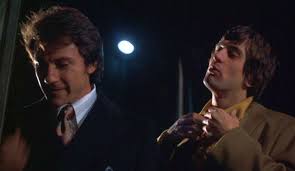
Inspired moment #1: Johnny Boy dancing to Mickey’s Monkey outside the car when it’s all falling apart.  Johnny Boy’s the joker in the pack, and De Niro the movie’s wild card! Sometimes, even Harvey Keitel can only look on in astonishment and wonder at De Niro, as if to say, where did this kid come from? But it would be wrong to talk about De Niro’s performance here without acknowledging Keitel’s great work, his simplicity and rock-solid presence.  The entire movie is a beautiful duet, best summed up by two scenes: the ‘improv’ in the “back room” early on, and the way they each lay out handkerchiefs on the gravestones in the cemetery—the Abbot and Costello of the Lower East Side.

bob & harvey

De Niro & Costume

De Niro’s choice of costume for his characters has always been impeccable. Johnny Boy may be wild, but he’s fastidious about the way he looks, and you can see this is not only in the way Johnny Boy dresses but in the way he readies himself in preparation to greet his friends in that second entrance—that is, once he’s put his trousers back on.  But there are countless examples of De Niro’s great costume choices: in Goodfellas, for example, when De Niro’s Jimmy Conway is arrested.  What struck me about De Niro’s costume choice here—a yellow jersey, jeans—was the level of detail for such a seemingly offhanded moment that takes place within a montage of arrests.  It can only be for a few seconds of screen time, but that yellow jersey speaks volumes.

De Niro & Detail

tan jacket

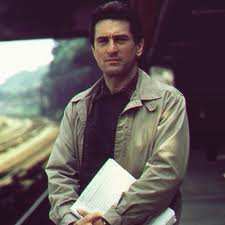
Talking about De Niro’s wardrobe tests for Falling in Love, and how he finally decided on the type of jacket his character would wear, Meryl Streep said… “[the jacket] was tan, it was ignorable, but that’s different from unimportant. Details are important, and Bob knows that.”

Taxi Driver (1976) —

Inspired moment #2: After shooting Sport (Keitel), Travis sits down in the middle of the street, between parked cars; it’s a strange and disconcerting moment—Travis’s body descending into trauma?—all the more so for being so unexpected.  Where did this detail come from? It seems so unforced: an actor’s truth transcending genre and pulp style.  In Scorsese’s early movies, life is always intervening and his actors respond in kind—at least that’s what it feels like.  But we’re also watching hungry, ambitious actors at the top of their game. Manny Farber and Patricia Patterson described Taxi Driver as “buzzing with star-turn acting”, which it is, though I’d call it an anti-star-turn very much attuned to a specific time and place: New York, 1970s, the Actor’s Studio: from street to (acting) class to screen, and hipper than anything Hollywood had to offer.   It was Farber/Patterson, in the same article, who wrote one of the best things I’ve ever read about De Niro: they refer to him as “a high-class actor…whose acting range is always underscored by a personal dignity.”  We must not forget that Farber, a great painter and critic, moved in the same circles as De Niro’s artist parents and would have recognised a fellow artist’s dedication to the truth: Negative Space, Farber’s singular collection of film writing, is dedicated to De Niro’s mother, Virginia Admiral; while De Niro, in those days, was the actor as termite-artist, prestige-resistant, burrowing through the Hollywood canvas.  (cf. New York, New York.)

Raging Bull (1980) —

Bouncer

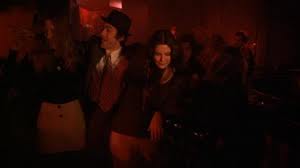
Inspired moment #3:  When Jake and his brother Joey (Joe Pesci) attend St Clare’s annual summer dance, Jake sees Vicky (Cathy Moriarty) leave with a local mobster (Frankie Vincent). But it’s what happens next, when Jake helps a doorman evict someone from the club: it’s another lovely detail—casual, off the cuff, and exquisitely judged—that tells us about Jake’s place and standing within the community.  Detail in service of the truth. And let’s not forget Jake’s culinary advice—written or improvised?—to his first, beleaguered wife, as she cooks a steak: “don’t overcook it—it defeats its own purpose.” 

The King of Comedy (1983) —

King of Comedy limo

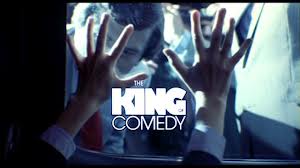
From its homage to John Cassavetes’ Opening Night—a freeze-frame of a fan’s hands pressed against the window of a limousine—to its dissection of fame in the 20th Century post John Lennon’s assassination, The King of Comedy is a forerunner to Larry Sanders, with its behind-the-scenes look at a talk-show, and celebrities playing versions of themselves. Which makes Rupert Pupkin the patron saint of cable and reality television. So an argument could be made that Scorsese and De Niro’s fifth collaboration—and a commercial failure on its release—is the cornerstone of HBO’s present dominance. And—Hey Now!—don’t we see traits of Rupert Pupkin in Jeffrey Tambor’s Hank?  (Check out Season 2 episode Hank’s Wedding.) Rupert could certainly have played the role of Larry’s sidekick, if he hadn’t harboured such crazy ambitions to be out there on his own.  And Rupert is out there—a more psychotic version of David Brent, which brings us back to Larry Sanders (cf. The Office), HBO and the question of influence. (And I haven’t even mentioned The Sopranos.)   This is one of De Niro’s greatest performances, perhaps his best: inspired, uncompromising and—pre Midnight Run—very funny.

True Confessions (1981) —

Falling in Love (1984) —

Two Ulu Grosbard films. True Confessions was written by husband and wife team John Gregory Dunne and Joan Didion, and based on Dunne’s novel. Tonally it belongs to the 1970s—Chinatown is in its sights. You believe De Niro’s priest has said a thousand masses, and heard a thousand confessions; while Falling in Love is like a made-for-television movie devised by Lee Strasberg. Which is to say that Grosbard, a man of the theatre, is an actors’ director: the performances are full, rich, nuanced and textured. De Niro and Streep are heavy-weights in fluff and the film as comfort-inducing as the best carrot cake and coffee, but I much prefer it to Brief Encounter, to which it is often, and unfavourably, compared.

Heat (1995) —

Talking about the differences between De Niro and Pacino, Michael Mann described them in terms of colours: Pacino is “deep red”, De Niro “cool blue”.  For me, “cool blue” takes it. Pacino rips and roars—“Sit down, Ralph!”— while De Niro gives one of his great minimalist performances: his presence balancing Mann’s tendency towards verbosity: who needs Mann’s inflated dialogue when you’ve got De Niro? Mann certainly doesn’t.  But then the abiding impression the film leaves is a wash of “cool blue”.

Casino (1995)

Aside from a rare moment of levity—once again suited up but with his trousers off (cf. Mean Streets)—De Niro’s Ace Rothstein is cold, dead-eyed, cool and controlling, and Sharon Stone’s Ginger like a slot machine that can’t stop giving out, much to Ace’s displeasure. Was this his last great leading role?

Jackie Brown (1997)

“Sadness” is not a word one normally associates with the exuberant Quentin Tarantino, but there it is…Jackie Brown is both lovely and tough and features one of De Niro’s (and Tarantino’s) saddest characters.  Louis Gara (De Niro) gives off a sadness that I don’t remember from Elmore Leonard’s novel, Rum Punch.  It’s as if he’s experienced so great an internal collapse—too many joints, too much time in the joint—that death would be a welcome relief.  And when it comes, it’s heartbreaking: filmed from behind, a static camera, we don’t even see De Niro’s face: it’s all in his back and shoulders—forfeit, collapse, resignation.

—MM

DAVID MAMET’S HONEST HYPOCRITES

Whenever I watch David Mamet’s films, I am reminded of William Hazlitt’s brilliant essay on actors.  Actors, wrote Hazlitt, “are the only honest hypocrites.”  To which we might tentatively add those honorary members of the acting profession—the con man and the politician.  From House of Games to Wag the Dog, Mamet has presided over films that are like elaborate tricks, in which con-artists act out roles in exquisitely designed scams.  Whichever way you look at it, somebody is always being duped—and that includes us.

In Redbelt, Mamet’s ninth film as a writer-director, it’s Mike Terry (Chiwetel Ejifor), a jiu-jitsu instructor, who gets seduced by Hollywood-types and scammed by fight promoters, all in the name of entertainment.  Money’s involved, as it usually is in Mamet, and pride and honor is thrown into the mix.     Mike is ex-army, though what he did “out there”—presumably Iraq —is only briefly alluded to. (Mamet has always resisted back-story.) Mike runs a jiu-jitsu academy in L.A., training, among others, cops and doormen in the art of self-defense.  Two incidents early on trigger the plot. In the first, a woman (Emily Mortimer) enters the academy and (inadvertently) shoots out a window, narrowly missing one of Mike’s cop-students.  In the second, Mike comes to a movie star’s rescue in a nightclub brawl.  Both scenes establish Mike’s character—honorable and tough.  And both leave him vulnerable to outside forces.  The film charts Mike’s journey from idealist to practical idealist.

Mike’s idealism is taken for weakness, though his wife would probably call him naïve, or at the very least mock his purity.  Mike is a fighter who refuses to fight—“competition weakens the fighter”, he tells her.  His wife sees this adherence to a code as a refusal to participate in the messy business of life.  She would seem to be the practical one.  Where Mike talks in such abstract terms of not wanting to bring shame or dishonor upon the Academy, she just wants to keep the damn thing open, trading for business.  Money’s tight, a problem which becomes further exacerbated after Mortimer’s explosive entrance. When we first see Mortimer, she’s driving through LA in search of a prescription: cascading rain, agitated wipers, and deserted streets. Things are that bad you half expect her to run into Julianne Moore and Magnolia’s biblical downpour. Mamet has always loved noir’s theatrical landscape, a place where he can house his games.  Redbelt, then, has one foot in noir and the fight picture, while simultaneously reaching for the nobility of the Samurai film.  Certainly, Ejifor’s performance, and the role as written, is more in keeping with the latter. It’s a lovely performance—calm, centered, physically contained, and not unlike Val Kilmer’s Special Forces operative in Spartan, though Kilmer had his own cool, quizzical thing going on.

Although Mamet works predominantly within established genres, there is always something fresh about his approach.  He moves into genre as one might move into a listed building: he respects the architecture, the building’s history, but makes it feel like home—Mamet world—filling it with the people and the things he likes. His films constitute a democracy ruled by a tyrant: actors and non-actors happily co-exist; the movie star and the repertory player are equally at home; and there is always room for family and friends (Rebecca Pidgeon, William H. Macy, Joe Mantegna, and Ricky Jay).  But all toe the Mamet line (or lines). His famously profane speech is as distinctive and as metronomically precise as a Philip Glass score: tick-motherf***ing-tock. At its best (American Buffalo, Glengarry Glen Ross,) Mamet’s dialogue gives the impression of being ragged and wild, though it is anything but; at its most jarring, the actors speak as though listening to a click-track.  Control is Mamet’s thing, and he rarely loses it.   (Or as Mike puts it, “take the fight out of your face.”)

This extends to his mise-en-scene, which, understandably, is often overlooked because of the dialogue.  Like Robert Bresson, another advocate of non-actors, Mamet constructs sequences from uninflected shots and uninflected performances—Mamet’s dialogue is inflected enough.  But as Phillip Lopate suggested, as early as Homicide (1991), Mamet has been “evolving a personal cinema which may yet stand comparison with that of anyone of his generation.”  I agree.  Think of those modern juggernaughts of genre, the Oceans and Bourne trilogies, fast and slick, franchise-ubiquitous, whose roll-out and distribution patterns enact a kind of zoning—the Starbucks of the multiplexes. Then think of Mamet’s versions (Heist, Spartan), which are bespoke by comparison, European in sensibility, despite the Americanness of the dialogue and the roll-call of Great American Actors who have lined up to shoot his intoxicating breeze—Newman, Pacino, DeNiro, Hackman. For over two decades, Mamet, no less than John Cassavetes or even Larry David for that matter, has been making a form of home movie but without venturing into the deeply autobiographical or personal nature of his plays (The Cryptogram, The Old Neighborhood).  (Although I’ve long thought that the wonderful scenes between Philip Seymour Hoffman and Rebecca Pidgeon in State & Main were a tribute to his wife.)  And then there are Mamet’s views on acting, best exemplified by William H. Macy.  You only have to see Macy in films that aren’t by Mamet (Fargo, Magnolia, The Cooler) to see the influence Mamet exerts on American film. And where would HBO (Entourage) and Showtime (Mad Men) be without  Mamet’s Men (Piven, Slattery)?

In the same way that Virginia Woolf’s unsigned essays for the TLS were manifestos for the novel, as Woolf saw it, Mamet’s essays and books espouse a theory—his theory—of filmmaking and acting, which the films admirably demonstrate.    Mamet is the practical idealist.  The book he wrote for actors, True or False: Heresy and Common Sense for the Actor, is full of plain speaking advice: “…my views have been informed by and directed toward performance on the stage in front of a paying audience.  That is what acting is. Doing a play for the audience.  The rest is just practice.  And I see the life of the academy, the graduate school, the studio, while charming and comfortable, are as removed from the life (and the job) of the actor as aerobics are from boxing.” 

You could see this as further evidence of Mamet’s control extending beyond the confines of his film set or the rehearsal studio.  Or perhaps it’s simply Mamet’s way of keeping his own actors—his hypocrites—honest.

—Mick McAloon