Program Notes: Boyhood

By virtue of its unusual production history, Boyhood gives us two films in one: a work of fiction spanning twelve years in the life of a young boy growing up in Texas; and a shadow-documentary which escorts its fictional counterpart each step of the way. How could it be otherwise given Richard Linklater’s singular decision to shoot the film over a corresponding period of time, and with the same cast? The actors age before us, though it is the evolution of Ellar Coltrane (who plays the boy, Mason) and Lorelei Linklater (his sister) that has the most resonance.

Like Truffaut’s Antoine Doinel films and Michael Apted’s Up series, Boyhood’s power is accumulative, though Linklater’s longitudinal study is a lesson in compression: he gives us the incremental bloom of Mason’s life, and all of its attendant experience, in less than three hours. The seamless and unannounced transitions that introduce each phase of his development elicit from the viewer a commensurate gasp of delayed recognition: look how he has grown! But underpinning it all is a feeling of concern and even suspense, no doubt generated by our awareness of the cast’s deep investment, as well as the onset of time: what will become of Mason/Ellar?

As we follow Mason through the commonplace rituals of an American childhood, we begin to see that one of Linklater’s achievements is to have created something unerringly specific, deeply personal, and universal. And whilst the film is something of a paean to parenthood (Ethan Hawke and Patricia Arquette are both subtle and true as the boy’s divorced parents), Boyhood’s real subject is time, unfolding as it does in a perpetual present tense.

—Mick McAloon

NOAH BAUMBACH—Deja Vu

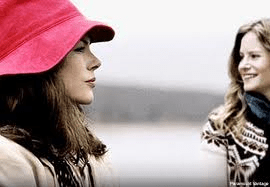
From its Eric Rohmer-inspired title, to its poster’s mid to late 70s art-directed aesthetic—with Nicole Kidman in profile, and that bright floppy hat a further giveaway—you could be forgiven for thinking you’d already seen Margot at the Wedding.  I know that’s how I felt prior to seeing the film at the NYFF in 2007.  I fully expected that there was going to be bookish talk by bookish people, and that the camera was going to be as skittish as Margot and her dysfunctional family.  Up on the screen it was going to look like life, while never letting you forget that you were watching a movie, with its abrupt and startling cuts which spoke of a filmmaker very much attuned to the romance of making a certain kind of film.  All at once it was going to look natural and airy, yet also muted, as though all of the colours had been drained in advance so that Noah Baumbach would never have to worry about his film becoming dated.  (It’s like longing to make a dirty-sounding record in an era of clean technology.)  In other words, Baumbach (along with Harris Savides) dated the movie himself. He did something similar with Greenberg.  The mores and manners belong to contemporary times, but the atmosphere evoked is of an earlier period of American film-making.

—MM

WES ANDERSON’S NEW YORKER FICTION—10 Years Later

It could be something out of a Preston Sturgess movie.  A bookish, young American is travelling alone from London to New York.  His preferred means of travel: an ocean liner, the QE2 no less.  That there are people waiting for him in London — anxious business associates, attuned to modern ways — doesn’t worry him; he is impervious to such distractions.  His name is Wes Anderson, and judging by his movies, as well as the cover of a recent Film Comment, he’s in a world of his own.

There was no high-jinx on-board Anderson’s first Atlantic crossing, no rapacious beauties intent on bagging a husband and a fortune.  What Anderson got was closer to one of Andy Warhol’s films — one set-up, a continuous take — than to the giddy heights of a Sturgess comedy: for the duration of Anderson’s voyage, and for anyone willing to watch, a CCTV camera relayed its static view of the ocean back to the ship’s monitors—a movie without end.  Its title?  “A View from the Bridge”.  It was the bleakest journey of Anderson’s young life.

Anderson is only 31, not that age should matter where talent is concerned.  But consider that by 1970, the year Anderson was born, Martin Scorsese and Peter Bogdanovich had each made one film and were at the vanguard of the New Hollywood.  It is a measure of Anderson’s prodigious gifts that he can count both directors as admirers.  After seeing Bottle Rocket, Anderson’s first feature, Scorsese wrote the young Texan a fan letter; while Bogdanovich wrote the introduction to the published screenplay of The Royal Tenenbaums.

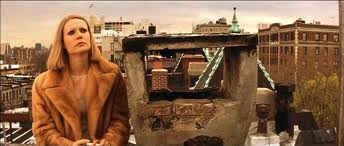
Anderson’s third film is his most successful to date, and to this observer as good as the brilliant Rushmore.  How much Anderson draws from life, I’m not so sure.  His literary influences, however, are clear for all to see.  Anderson’s inspiration is the literature of the East Coast—the New York stories of Wharton, Fitzgerald and Salinger, as well as a host of New Yorker writers.  But all of the above influences are filtered through a filmmaking sensibility that owes much to his mentors.  So while the Tenenbaums themselves feel like the inhabitants of Old New York, they actually reside in a dilapidated version of the city that has more in common with the Chelsea Hotel than the Algonquin.  But I guess that’s modern filmmakers for you.  Anderson, like Tarantino, is a child of the movie brats.  And indeed The Royal Tenenbaums displays the same love of the medium as Bogdanovich’s early work, though it is Scorsese’s rhythms that lie behind it—from The Big Shave to The Age of Innocence.  Think of it as Pulp Fiction’s preppy kid brother: more refined, less brash.  Like Pulp Fiction, it’s the sum of its youthful maker’s dreams and obsessions:  New Yorker Fiction, if you like.

—MM

THE TREE OF LIFE—A Death in the Family


Terrence Malick’s The Tree of Life feels as though it has been made with a great sense of freedom.  I agree with A.O. Scott’s remark in his NY Times review that “To watch ‘The Tree of Life’ is, in analogous fashion, to participate in its making.  And any criticism will therefore have to be provisional.”  So provisionally I would say that it’s like a home movie, albeit the most expensive of its kind.  (It’s also like a dream.) The camera stays close to the actors—like a dad with his Super 8—but the actors lead the way.  Malick’s cinematographer, Emmanuel Lubezki, understands and anticipates movement with a sure sense of how something might cut together.  In that regard, it’s like an improvised dance film.   The sense of freedom is so great that it begs the following questions: Was there even a script, and if so, what did it look like?  What did the rehearsal / shooting process entail?  What constitutes the offer of a role for an actor in a TM film? And for that matter, what constitutes character? I would not be surprised to discover that there were only notes or ideas for scene.  For the film is surely process-led.  Not that the means of its making should matter—not in the end, anyway: it is what we’re left with that counts.   And what we’re left with in this instance, I would say, is a very personal film—autobiographical by all accounts—ostensibly about grief. I found it compelling, and in places very moving. Yes, the birth of creation is in there too, but to me that’s just conjecture, and Malick is free to make it, whereas the grief is palpable.

In Malick’s films people are at the mercy of the elements, mental weather included. In The Tree of Life, a middle-aged man (Penn) remembers his childhood in Waco, Texas in the 1950s.  He is still trying to come to terms with death of his younger brother, a death we never see.  He looks haunted (and Penn looks suitably ravaged).  We gather that Jack is an architect.  There are sketches of scenes in, presumably, Jack’s offices, a gleaming, glass-fronted tower in present-day Austin, Texas.  And these scenes really are sketches, the closest the film comes to a form of conventional exposition.  We see him point to blue-prints and take calls.  We see him in an apartment with a woman.   But he inhabits neither of these spaces: he is a ghost of his own life.  But the soul of the film—if a film can be said to have a soul—exists in Jack’s remembrance of childhood: his domineering but no less loving father (Brad Pitt), his beautiful and graceful mother (Jessica Chastain), and his two brothers.  This, to me, is the richest section of the film, and the most moving. And to remember it afterwards, in analogous fashion, is to participate in its protagonist’s consciousness.

Of course, that is only a nominal description of what the film is about, with the emphasis on synopsis, and the chronology ironed out.  What it is is another matter.  It is common-place for filmmakers to say that films are written three times: at the writing stage, obviously; during shooting; and finally—and perhaps, most importantly—in the editing.  I’d guess that Malick found his film during shooting and continued to find it right up until it was locked.  (Perhaps for Malick there was a reading stage–a lifetime of reading!) There is barely a conventional scene in it, and you can kiss goodbye to the notion of a three-act structure.  With his elliptical style at its most extreme, Malick’s film “flashes by” in a ribbon of images, presumably as a way of putting us inside Jack’s head: “Unless you have loved, your life will flash by”. We move from childhood to adulthood in a cut, and back again. (It is simultaneously fragmented and continuous.)   I love the way Malick’s film rustles into being, its sense of immediacy: a girl looking out of a barn window onto a field, the marriage of image and music, the sense of wonder at the world.  At its rhapsodic best, it floats free of its baggage—the profundity of its themes, the fame of its stars, the weight of (our) expectation.   It held me from beginning to end. Not that I went with everything.  The much talked about dinosaurs, for example, left me puzzled. But this was more to do with how they are rendered on screen than any philosophical inquiry on the part of Malick.  The CGI seems at odds with a filmmaker who is a natural with natural light and relishes the unplanned and unforeseen.

—MM

ANIMAL KINGDOM—the Glamour and the Grunge


In his book ‘Cultural Amnesia’, Clive James writes that “the atmospherics of Michael Mann’s Heat affect the look of any movie made about crime: other directors, whether working out of the United States, Latin America, Europe or Hong Kong, either go with him, towards glamour, or go against him, towards grunge, but they always have his look in mind.”  There’s more than a touch of Heat to David Michôd’s Animal Kingdom, especially in its depiction of an armed robbery unit that is as wild and lawless as its quarry.  It also has that city-at-night feeling which Mann is so attuned to, though in this instance the city is Melbourne. But despite its cinematic influences (Goodfellas, Magnolia), Animal Kingdom is rooted in the real.   Michôd has spoken in interviews of wanting to “make a film that unlike, say, a Quentin Tarantino or Guy Richie crime movie, took itself seriously, and was set within a big, dark, nasty world, which was nevertheless still quite poetic and beautiful.”  In other words, Michôd goes for the glamour and the grunge.

From its stark opening (it begins with a bark) to its final confrontation (it ends with a bang), Animal Kingdom more than justifies its grand and arresting title. In its native land, it has been called “the Australian Godfather”, and one can see why: a terrific cast at the top of their game; a brilliant script which takes the sequence as its dramatic unit; a family drama in which the family’s youngest (and most innocent?) must make his way in the world.  Where it differs from The Godfather is in its sense of scale and ambition.  But then Michôd’s crime family is not as organised, nor as operatic, as Coppola’s: the Cody’s are not the Corleones, though what they lack in grandeur they more than make up for in their propensity for violence, betrayal, and incestuous feelings.

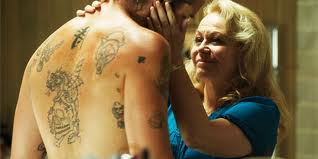
The film is loosely based on an actual incident in Melbourne’s recent history known as the Walsh Street Killings. But while Michôd uses this incident to ignite the film’s plot, he is after bigger game.  Like the recent Winter’s Bone, Animal Kingdom is about survival. Its teenage protagonist, Josh, must negotiate the perilous terrain of family—or at least his family.  His notorious uncles and grandmother, to whom he turns after the death of his mother, provide Josh with an unsentimental education: “We take it out on whoever turns up.  That’s what we do.”  It is left to Guy Pearce’s homicide detective, and the film’s moral centre, to guide Josh as best he can.  It is Pearce who supplies us with the film’s metaphor of the “animal kingdom”, telling Josh:”You’ve survived because you’ve been protected by the strong, but they’re not strong anymore.”

In case we were in any doubt about Michôd’s intentions, the film is full of bracing scenes in which the strong and the cruel survive at the expense of the vulnerable. Time and again we see goodness expunged, innocence corrupted. Watch how Michôd fixes on the smooth and youthful complexion of a rookie cop, his good manners, and his by-the-book approach as he responds to the report of a stolen car. This is just one of several extraordinary sequences. Already you sense that Michôd is one of those “sprinkler on the lawn” directors who can summon dread from the sweetest of sights. And unlike Josh, the influences that have shaped him (Scorsese, Mann, P.T. Anderson) have been all to the good. Josh has been raised by wolves and acts accordingly.

—MM